Skip to content


Buying your first home in Oklahoma means taking responsibility for a heating and cooling system that will consume nearly half your annual energy budget. Your HVAC system keeps you comfortable through scorching summers that regularly exceed 90°F and winters that dip below freezing.
Understanding how to maintain, budget for, and evaluate this equipment protects both your comfort and your wallet from unexpected expenses.
Key Takeaways
- Oklahoma’s extreme temperature swings (90°F+ summers and freezing winters) demand reliable heating and cooling systems that work year-round
- Heating and cooling accounts for nearly half of your home’s annual energy costs, making HVAC efficiency a major budget consideration
- Most HVAC systems last 15 to 20 years with proper maintenance, so knowing your system’s age helps you plan for future expenses
- Annual professional tune-ups (typically $75 to $200) can prevent costly breakdowns and extend your system’s lifespan by years
- Licensed HVAC contractors are required by Oklahoma law to perform installation, repair, and refrigerant work
Why Does Your HVAC System Matter So Much in Oklahoma?
Your heating and cooling equipment works harder in Oklahoma than in most other states. The combination of intense summer heat, unpredictable winter cold snaps, and high humidity in eastern regions creates demanding conditions that test even well-maintained systems. First-time homeowners who understand these challenges can make smarter decisions about maintenance, upgrades, and energy efficiency.
Understanding Oklahoma’s Demanding Climate
Oklahoma’s climate pushes HVAC systems to their limits throughout the year. According to the Oklahoma Climatological Survey, temperatures of 90°F or greater occur on average about 60 to 65 days per year in the western panhandle and northeast corner of the state. In southwest Oklahoma, that number climbs to approximately 115 days annually.
Summer heat isn’t the only challenge. Heat index values of 105°F or greater occur more than 40 times per year in the far southeast, adding humidity stress that makes your air conditioner work even harder. Winters bring their own demands, with temperatures frequently dropping below freezing and occasional ice storms that can knock out power for days.
This climate diversity means your HVAC system rarely gets a break. During summer months, your air conditioner may run for extended periods each day. In winter, your furnace or heat pump must provide consistent warmth despite rapid temperature changes. Understanding how residential HVAC systems work helps you recognize when something isn’t performing as it should.
How Much of Your Energy Bill Goes to Heating and Cooling?
The financial impact of your HVAC system deserves serious attention. According to Energy Star, nearly half of the energy used in your home goes to heating and cooling. For the average American household spending more than $2,200 annually on energy bills, that translates to over $1,000 per year just to stay comfortable.
In Oklahoma’s demanding climate, that percentage can climb even higher during extreme summer months or unexpected cold snaps. An inefficient system, poor insulation, or deferred maintenance can push your heating and cooling costs well above average. First-time homeowners often experience sticker shock when they receive their first summer electric bill without understanding how much their air conditioner contributes to that total.
The good news is that investing in efficiency and maintenance pays real dividends. An Energy Star certified furnace can reduce heating costs by as much as 40%, while an Energy Star air conditioner can save you up to 50% on cooling bills compared to older, less efficient models.
What Are the Main Types of HVAC Systems in Oklahoma Homes?
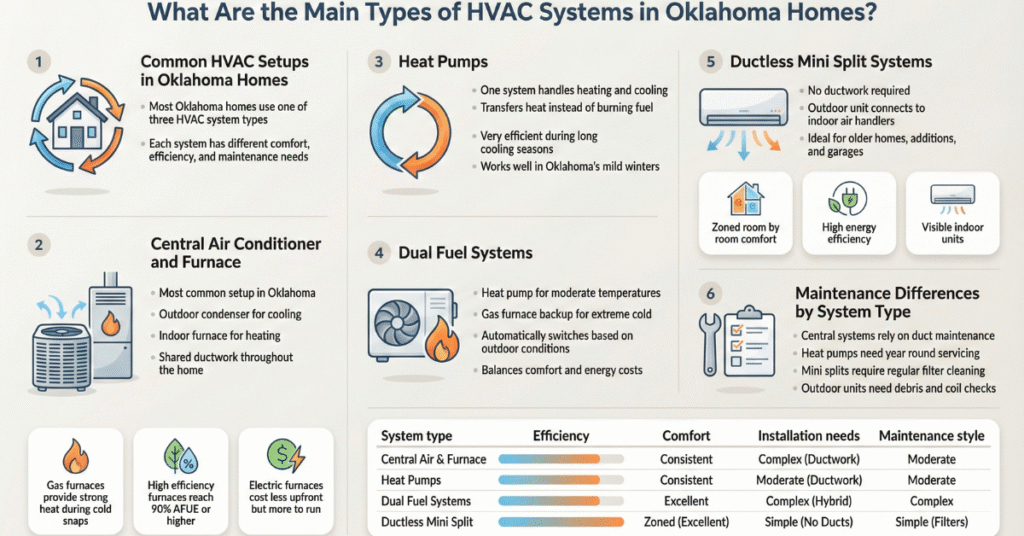
Oklahoma homes use several different heating and cooling configurations. Knowing what type of system you have helps you understand maintenance requirements, replacement costs, and energy efficiency expectations. Most homes in the Stilwell area and surrounding Oklahoma and Arkansas communities use one of three primary setups.
Central Air Conditioners and Furnaces
The most common HVAC configuration in Oklahoma homes combines a central air conditioner with a gas or electric furnace. This split system uses an outdoor condenser unit for cooling and an indoor furnace for heating, with both sharing the same ductwork to distribute conditioned air throughout your home.
Gas furnaces are popular in Oklahoma because they provide powerful, consistent heat during cold snaps. They use natural gas as fuel and are rated by their Annual Fuel Utilization Efficiency (AFUE), which measures how efficiently they convert fuel to heat. Modern high-efficiency furnaces achieve AFUE ratings of 90% or higher, meaning 90 cents of every dollar spent on fuel goes directly to heating your home.
Electric furnaces are simpler and less expensive to install but typically cost more to operate. They’re often found in areas without natural gas service or in homes where the previous owner prioritized lower upfront costs. If you’re comparing options, our guide on gas vs electric furnace systems explains the tradeoffs for Oklahoma homeowners.
Heat Pumps and Dual Fuel Systems
Heat pumps offer an energy-efficient alternative that provides both heating and cooling from a single outdoor unit. Instead of generating heat by burning fuel, heat pumps transfer heat from outdoor air into your home during winter and reverse the process during summer.
Modern heat pumps work effectively in Oklahoma’s moderate winters and perform exceptionally well during the long cooling season. However, their heating efficiency decreases as outdoor temperatures drop below freezing. For this reason, many Oklahoma homeowners choose dual fuel systems that combine a heat pump with a gas furnace backup. The heat pump handles moderate temperatures efficiently, while the furnace takes over during extreme cold.
Dual fuel systems offer year-round comfort and versatility. They provide reliable heating in winter and cooling in summer while optimizing energy costs based on outdoor conditions. If your home has a dual fuel setup, understanding when each component operates helps you recognize normal operation versus potential problems.
Ductless Mini-Split Systems
Ductless mini-split systems are becoming increasingly popular in Oklahoma, especially for home additions, converted garages, or older homes without existing ductwork. These systems connect an outdoor compressor to one or more indoor air handlers mounted on walls or ceilings.
Mini-splits offer several advantages for first-time homeowners. They allow zone control, meaning you can heat or cool individual rooms independently. They’re also highly efficient because they avoid the energy losses associated with ductwork. However, mini-splits require professional installation and maintenance, and the indoor units are visible in your living space.
If your Oklahoma home uses mini-splits, maintenance requirements differ slightly from central systems. The indoor air handlers need regular filter cleaning, and the outdoor unit requires the same care as a traditional air conditioner condenser.
How Long Should Your HVAC System Last?
One of the first questions every new homeowner should ask is how old their HVAC equipment is. The age of your system directly affects reliability, efficiency, and how much you should budget for potential replacement. Knowing typical lifespans helps you plan ahead rather than facing an emergency replacement during the hottest or coldest week of the year.
Average Lifespan by Equipment Type
Different HVAC components have different expected service lives. According to Trane, an air conditioner or heat pump has a service life expectancy of 10 to 12 years, while you can expect a furnace to last 15 to 20 years. Carrier notes that well-maintained HVAC systems can sometimes reach or exceed 30 years, though 15 to 20 years is more typical.
Here’s what to expect from common equipment:
- Central air conditioners typically last 15 to 20 years, though some may only reach 10 years in demanding climates like Oklahoma’s
- Gas furnaces last 20 to 30 years with proper maintenance, with the heat exchanger being the most critical component
- Heat pumps average 10 to 20 years, with 15 years being typical for systems used year-round
- Ductless mini-splits can last 10 to 30 years depending on usage and maintenance
Oklahoma’s climate can shorten these lifespans. Systems that run extensively during long, hot summers experience more wear than those in milder regions. The key factor you can control is maintenance. As HVAC professional Joe Severson explains, “While no level of service can prevent all sudden breakdowns, having regular documented maintenance will help prevent costly repairs and the inconvenience of being without heat or AC when you need it most.”
Signs Your System May Be Failing
Recognizing warning signs early gives you time to plan and budget for replacement rather than scrambling during an emergency. Watch for these indicators that your HVAC system may be approaching the end of its useful life:
Rising energy bills without changes in usage patterns often indicate declining efficiency. As components wear, your system works harder to maintain the same comfort level.
Frequent repairs suggest underlying problems. If you’re calling for service multiple times per year, the repair costs may exceed the value of continued maintenance.
Uneven temperatures throughout your home can indicate ductwork problems, failing equipment, or an improperly sized system.
Unusual noises like grinding, squealing, banging, or rattling signal mechanical problems. Strange sounds warrant immediate professional attention.
Excessive humidity during summer or overly dry air in winter suggests your system isn’t conditioning air properly.
For a comprehensive list of warning indicators, review our guide on signs your HVAC system is failing. Catching problems early often allows for repairs rather than full replacement.
What HVAC Maintenance Should First-Time Homeowners Know?
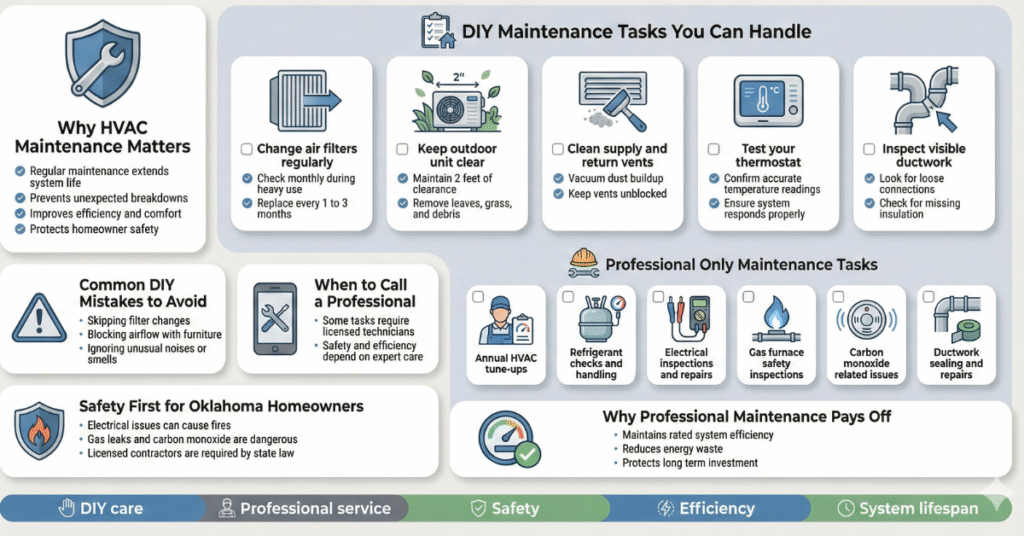
Regular maintenance is the single most important factor in extending your HVAC system’s lifespan and preventing unexpected breakdowns. Some tasks are simple enough for homeowners to handle, while others require professional expertise and specialized tools. Understanding the difference protects both your equipment and your safety.
DIY Maintenance Tasks You Can Handle
First-time homeowners can perform several basic maintenance tasks that make a real difference in system performance and longevity:
Change your air filter regularly. This is the most important maintenance task you can do yourself. A dirty filter restricts airflow, forces your system to work harder, and can lead to frozen evaporator coils or overheated furnaces. Check your filter monthly during heavy-use seasons and replace it every one to three months depending on the filter type and household factors like pets.
Keep the outdoor unit clear. Your air conditioner or heat pump condenser needs adequate airflow to function efficiently. Maintain at least two feet of clearance around the unit by trimming vegetation, removing debris, and keeping the area free of leaves and grass clippings.
Clean supply and return vents. Dust and debris accumulate on vent covers throughout your home. Vacuum these regularly and ensure furniture or curtains aren’t blocking airflow.
Test your thermostat. Periodically verify that your thermostat accurately reads the room temperature and that it triggers your heating and cooling systems when you adjust the settings.
Inspect visible ductwork. If you can access ductwork in your attic, basement, or crawlspace, look for obvious disconnections, holes, or areas where insulation has fallen away.
Our seasonal HVAC maintenance checklist provides a month-by-month guide to keeping your system in top condition throughout the year.
When to Call a Professional
Many HVAC maintenance tasks require licensed professionals with specialized training and equipment. In Oklahoma, the Construction Industries Board requires contractors to be licensed to perform heating, air conditioning, and refrigeration work. This regulation protects homeowners from unqualified technicians and ensures work meets safety standards.
Call a professional for these tasks:
Annual tune-ups involve comprehensive inspections, cleaning, and adjustments that go beyond what homeowners can safely perform. Technicians check refrigerant levels, test electrical connections, clean coils, lubricate moving parts, and verify safety controls.
Refrigerant issues require EPA-certified technicians. If your air conditioner isn’t cooling properly, low refrigerant may be the cause, but only licensed professionals can legally handle these chemicals.
Electrical problems pose serious safety risks. Unusual smells, tripped breakers, or visible damage to wiring warrant immediate professional attention.
Gas furnace concerns including strange odors, yellow or flickering pilot flames, or carbon monoxide detector alerts require expert evaluation. Gas leaks and carbon monoxide pose life-threatening dangers.
Ductwork repairs often involve accessing tight spaces and require proper sealing techniques. Improperly sealed ducts can waste 20% or more of your heating and cooling energy.
As Oklahoma State University Extension energy specialist R. Scott Frazier explains, “A 14 SEER system can be brought down to an actual 5 SEER if not installed correctly. Duct work should be insulated and sealed.” Professional installation and maintenance ensure your system delivers the efficiency you’re paying for.
How Much Does HVAC Maintenance Cost in Oklahoma?
Budgeting for HVAC maintenance helps first-time homeowners avoid financial surprises. Regular service costs are predictable and far less expensive than emergency repairs or premature system replacement. Understanding typical costs helps you evaluate quotes and plan your home maintenance budget.
Annual Tune-Up Costs
Professional HVAC tune-ups in Oklahoma typically cost between $75 and $200 per visit, according to Angi and This Old House. The exact price depends on your location, the type of system, and the specific services included.
A standard tune-up typically includes:
- Thermostat calibration and testing
- Air filter inspection and replacement
- Electrical connection inspection and tightening
- Lubrication of moving parts
- Condenser and evaporator coil cleaning
- Refrigerant level check
- Safety control testing
- Drain line cleaning
If your home has both a furnace and central air conditioning, plan for two annual tune-ups: one in spring before cooling season and one in fall before heating season. This timing catches potential problems before you need the equipment most and often qualifies for off-season pricing.
HVAC professional Taylor notes an important consideration for maintenance costs: “Especially on the heating side, consider if you’re looking at variable speed motors or logic boards. That kind of equipment is more advanced and has complicated circuitry. If you have an older system that doesn’t communicate with five other pieces of equipment, it’s going to tend to be less pricey to fix.”
Are Maintenance Plans Worth It?
Many HVAC companies offer annual maintenance plans or service contracts ranging from $150 to $500 per year. These plans typically include scheduled tune-ups plus additional benefits like priority scheduling, discounted repairs, and waived service call fees.
Maintenance plans make sense for homeowners who value convenience and predictable costs. Benefits often include:
- Scheduled reminders so you never forget annual maintenance
- Priority service during busy seasons when wait times can stretch for days
- Discounted parts and labor on repairs throughout the year
- Waived diagnostic fees when problems arise
- Extended equipment warranties that require documented professional maintenance
However, maintenance plans aren’t always the most cost-effective choice. Compare the plan cost to the price of individual tune-ups in your area. Review what’s actually included, as some plans only provide discounts rather than full service. Check whether your equipment warranty already requires professional maintenance, which you’d need regardless.
For homeowners who want the peace of mind and convenience of a comprehensive service agreement, our HVAC maintenance plan provides scheduled tune-ups, priority service, and protection against unexpected repair costs.
What Should You Check Before Buying an Oklahoma Home?
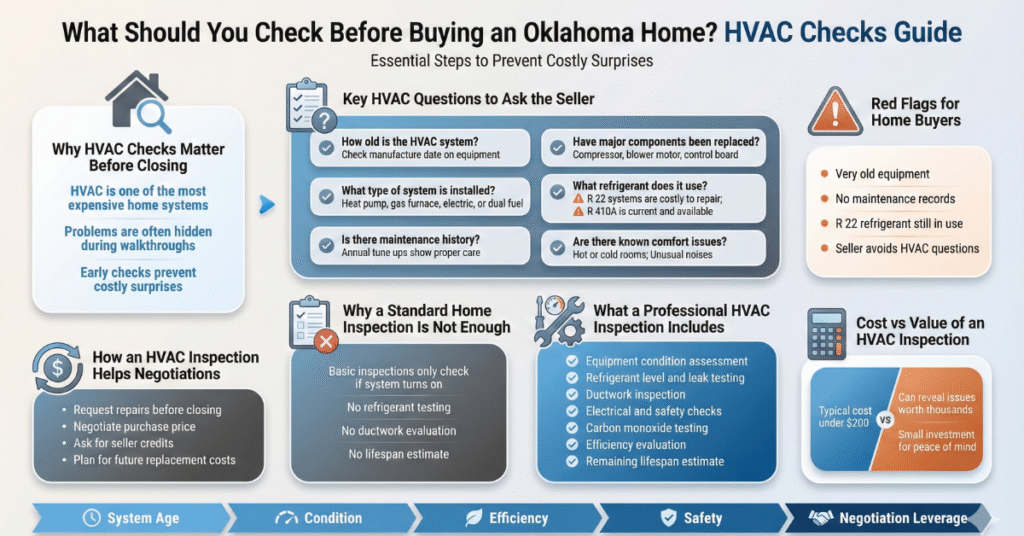
If you’re still in the home-buying process, evaluating the HVAC system before closing can save you thousands of dollars. The heating and cooling system is one of the most expensive components in any home, and problems often aren’t apparent during a casual walkthrough. Taking time to investigate now prevents unpleasant surprises after you’ve signed the papers.
Key HVAC Questions to Ask the Seller
Request specific information about the HVAC system before making an offer or during the inspection period:
How old is the system? Look for the manufacture date on the equipment labels. If the seller doesn’t know, the model and serial numbers can be researched online or verified by an HVAC technician.
What type of system is installed? Confirm whether you have a heat pump, gas furnace, electric furnace, or dual fuel system. Understanding your heating source affects operating costs and maintenance requirements.
Is there maintenance documentation? Sellers who can provide records of annual tune-ups demonstrate that the equipment has been cared for properly. Lack of documentation may indicate deferred maintenance.
Have any major components been replaced? Compressors, blower motors, and control boards are expensive repairs. Knowing if these have been recently replaced gives you confidence in remaining system life.
What refrigerant does the system use? Older systems using R-22 (Freon) are problematic because this refrigerant has been phased out. If your system develops a leak, repair costs will be significantly higher due to limited R-22 availability. Newer systems use R-410A, which remains readily available.
Are there any known issues? Ask directly about temperature inconsistencies, unusual noises, or rooms that don’t heat or cool properly. Sellers are typically required to disclose known defects.
Why a Separate HVAC Inspection Is Worth It
Standard home inspections include only basic HVAC checks. According to HVAC inspection specialists, most home inspectors simply confirm that the system turns on and reaches temperature. They typically don’t assess refrigerant levels, ductwork condition, internal components, or remaining useful life.
A professional HVAC inspection provides much more detailed information:
- Equipment condition assessment including wear on electrical components, motors, and connections
- Refrigerant level testing to identify potential leaks
- Ductwork evaluation for leaks, damage, or inadequate insulation
- Safety testing including carbon monoxide checks for gas furnaces
- Efficiency analysis to identify problems affecting energy consumption
- Remaining lifespan estimate based on equipment age and condition
This detailed information becomes powerful during price negotiations. If the HVAC system is aging or needs repairs, you may be able to negotiate a lower purchase price, request repairs before closing, or ask the seller to credit you for future replacement costs.
A professional HVAC inspection typically costs less than $200 and can reveal issues worth thousands of dollars. For a purchase as significant as a home, this small investment provides valuable peace of mind and negotiating leverage.
How Can You Save Money on Heating and Cooling?
Energy efficiency directly affects your monthly budget and long-term costs. Understanding efficiency ratings helps you evaluate existing equipment and make informed decisions when replacement becomes necessary. Simple behavioral changes can also reduce your heating and cooling expenses without any equipment upgrades.
Energy Efficiency Ratings Explained (SEER2 and AFUE)
HVAC equipment efficiency is measured using standardized ratings that allow comparison between different models. Knowing what these numbers mean helps you understand your current system’s performance and evaluate replacement options.
SEER2 (Seasonal Energy Efficiency Ratio 2) measures air conditioner and heat pump cooling efficiency. Higher numbers indicate better efficiency. As of January 2023, the U.S. Department of Energy requires minimum SEER2 ratings for new equipment. In the South-Central region including Oklahoma, split air conditioners must achieve at least 14.3 SEER2.
For perspective, a 10 SEER unit might cost $1,200 annually to cool a home, while a 15 SEER2 system could reduce that by 30% to 40%. Over a system’s 15-year lifespan, efficiency differences add up to thousands of dollars.
AFUE (Annual Fuel Utilization Efficiency) measures furnace efficiency as a percentage. A 90% AFUE furnace converts 90 cents of every fuel dollar into heat, with only 10 cents lost through exhaust. The minimum AFUE for non-condensing gas furnaces is 78%, but high-efficiency models achieve 95% or higher.
HSPF2 (Heating Seasonal Performance Factor 2) measures heat pump heating efficiency. Like SEER2, higher numbers indicate better performance. This rating matters most in climates where heat pumps provide significant winter heating.
When evaluating equipment, look for the Energy Star label. Energy Star certified HVAC products meet or exceed federal efficiency guidelines and can deliver significant utility savings compared to older or less efficient models.
Smart Thermostats and Simple Energy-Saving Tips
You don’t need to replace your HVAC system to reduce energy costs. Smart thermostats and behavioral adjustments can cut heating and cooling expenses by 8% or more annually.
Smart thermostats learn your schedule and preferences, automatically adjusting temperatures when you’re away or asleep. According to Energy Star, certified smart thermostats save approximately 8% on heating and cooling bills, or about $50 per year. In Oklahoma’s demanding climate, actual savings may be higher.
Smart thermostat features that save money include:
- Geofencing that detects when you leave home and adjusts temperatures automatically
- Learning algorithms that optimize your schedule without manual programming
- Remote access that lets you adjust settings from your phone if plans change
- Energy reports that show usage patterns and suggest improvements
Simple behavioral changes also make a difference:
- Adjust your thermostat by just 2 to 3 degrees when you’re away or sleeping. You likely won’t notice the difference, but your system will run less.
- Use ceiling fans to improve comfort without lowering thermostat settings. Fans allow you to raise the AC setting by about 4 degrees without reducing comfort.
- Close blinds and curtains during hot afternoons to reduce solar heat gain. Open them on winter days to capture free warmth from the sun.
- Seal air leaks around windows, doors, and electrical outlets. Even small gaps allow conditioned air to escape and outdoor air to infiltrate.
- Don’t heat or cool unused spaces. Close vents in guest rooms or storage areas, though avoid closing more than 20% of vents to prevent system strain.
Ready to Stay Comfortable in Your New Oklahoma Home?
Taking ownership of your first home in Oklahoma means learning to care for systems you may never have thought about before. Your HVAC equipment keeps you comfortable through summer heat waves and winter cold snaps while consuming a significant portion of your energy budget. The knowledge you’ve gained here puts you ahead of many homeowners who only think about their heating and cooling when something goes wrong.
Start by learning your system’s age and type. Schedule professional maintenance before your first summer cooling season or winter heating season. Change your air filter regularly and keep your outdoor unit clear. These simple steps protect your investment and help you avoid the expense and inconvenience of emergency repairs.
If you have questions about your HVAC system or want to schedule a maintenance visit, Girdner Heat and Air is here to help. We serve homeowners throughout Stilwell, Oklahoma and surrounding communities in Oklahoma and Arkansas with honest advice, reliable service, and the expertise to keep your home comfortable year-round. Contact us today to schedule your tune-up or to discuss any concerns about your heating and cooling system.