Skip to content



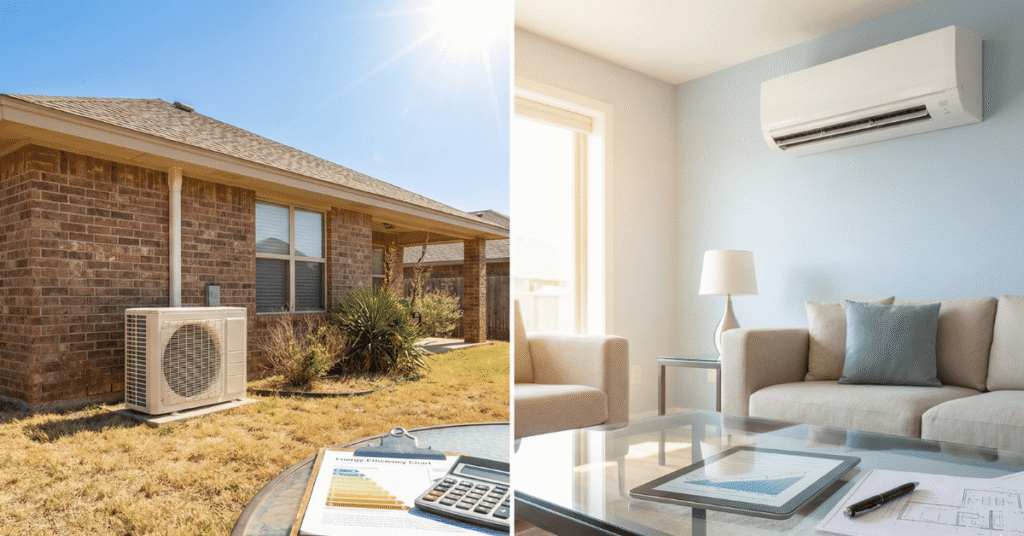
A ductless mini split system in Oklahoma typically costs between $2,500 and $6,000 for a single-zone installation, while multi-zone systems range from $6,500 to $15,000 or more. For most Oklahoma homeowners, the investment pays off through lower energy bills, year-round comfort, and a system that can last 15 to 20 years with proper care.
If you’re tired of battling hot spots in summer, struggling with an older home that lacks ductwork, or simply looking for a more efficient way to heat and cool your space, a ductless mini split might be exactly what you need. Let’s break down the costs, benefits, and considerations to help you decide if this investment makes sense for your home.
Key Takeaways
- Single-zone ductless mini split systems typically cost $2,500 to $6,000 installed in Oklahoma, while multi-zone systems range from $6,500 to $15,000+
- Mini splits can reduce cooling costs by 30% to 40% compared to central air, making them well-suited for Oklahoma’s hot summers
- These systems last 15 to 20 years with proper maintenance and provide both heating and cooling year-round
- Homes without existing ductwork, older properties, and room additions benefit most from ductless technology
How Much Does a Ductless Mini Split Cost in Oklahoma?
The total cost of a ductless mini split system depends on several factors, including the number of zones you need, the system’s capacity, and the complexity of your installation. Here’s what Oklahoma homeowners can expect to pay.
Single-Zone System Costs
A single-zone mini split system includes one outdoor compressor unit connected to one indoor air handler. This setup works well for cooling or heating a single room, home office, garage, or addition.
According to HomeGuide, single-zone mini split installation costs range from $2,500 to $6,000, depending on the unit’s BTU capacity and efficiency rating. For a typical bedroom or home office between 450 and 550 square feet, a 12,000 BTU system averages $3,500 to $5,000 installed. Larger spaces like garages or open living areas requiring 18,000 to 24,000 BTU systems cost $4,500 to $8,000.
Multi-Zone System Costs
If you want to condition multiple rooms from a single outdoor unit, you’ll need a multi-zone system. These setups connect one outdoor compressor to two, three, four, or even five indoor air handlers, each controlled independently.
Multi-zone systems typically cost $6,500 to $15,000 or more for complete installation. A dual-zone system covering 800 to 1,600 square feet averages $4,500 to $7,500, while a three-zone system ranges from $7,000 to $10,000. Whole-home installations with five or more zones can exceed $15,000 depending on your home’s layout and the brand you choose.
What Factors Affect Installation Price?
Several variables influence your final cost:
System capacity (BTUs): Larger spaces need more powerful units. You’ll typically need 20 to 60 BTUs per square foot, depending on factors like ceiling height, insulation quality, and sun exposure.
Number of zones: Each additional indoor unit adds to your total cost, including equipment, refrigerant lines, and labor.
Efficiency rating: Higher SEER2-rated systems cost more upfront but deliver greater energy savings over time. Entry-level systems start around 16 SEER2, while premium models reach 30 SEER2 or higher.
Installation complexity: Longer refrigerant line runs, difficult outdoor unit placement, or homes requiring electrical upgrades will increase labor costs.
Brand selection: Premium brands like Mitsubishi, Daikin, and Carrier command higher prices but often include better warranties and proven reliability.
If budget is a concern, Girdner Heat and Air offers HVAC financing options to help make your investment more manageable.
Why Are Mini Splits a Good Fit for Oklahoma’s Climate?
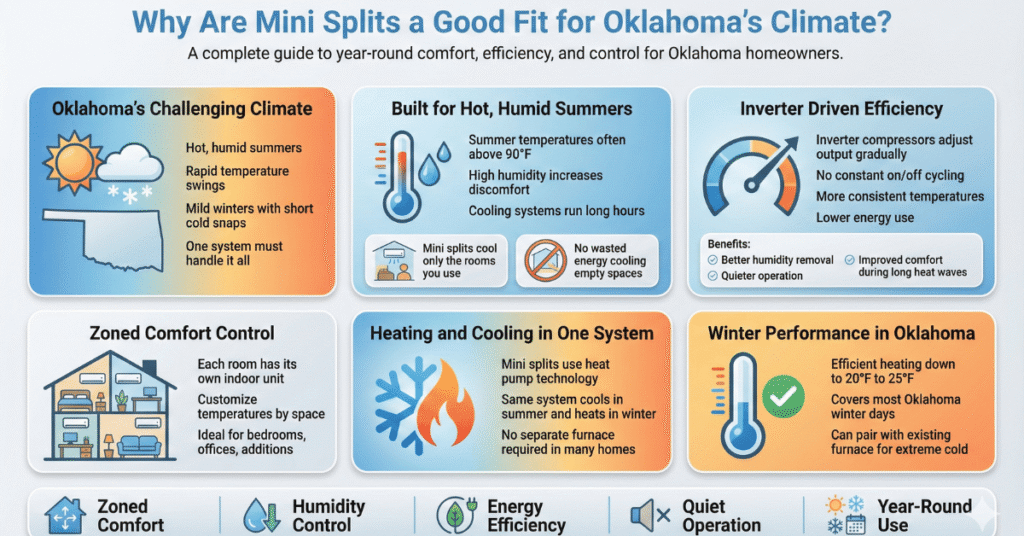
Oklahoma’s weather doesn’t do anything halfway. Summers bring intense heat and humidity, while winters can swing from mild to bitterly cold. This climate variability makes ductless mini splits an excellent choice for year-round comfort.
Handling Hot, Humid Summers
When temperatures climb into the 90s and humidity makes everything feel sticky, your cooling system works overtime. Mini splits excel in these conditions for several reasons.
Local Oklahoma HVAC professionals note that the state’s weather patterns, with hot humid summers reaching well above 90°F, make ductless systems particularly effective. Unlike central air that cools your entire home whether you’re using every room or not, mini splits let you direct cooling exactly where you need it.
The inverter-driven compressors in modern mini splits adjust their output based on demand rather than cycling on and off like traditional systems. This means more consistent temperatures, better humidity control, and quieter operation during those long summer days.
Year-Round Heating and Cooling in One System
One of the biggest advantages of ductless mini splits is their heat pump technology. The same system that cools your home in July can heat it in January, eliminating the need for separate heating and cooling equipment.
Mini split heat pumps work efficiently down to outdoor temperatures around 20°F to 25°F, which covers most Oklahoma winter days. On extremely cold nights, some systems include supplemental heating elements or can work alongside your existing furnace. This dual functionality means you’re investing in a complete comfort solution, not just air conditioning.
For a detailed comparison of how mini splits stack up against traditional central air, check out our guide on central air vs mini split systems.
How Much Can You Save on Energy Bills with a Mini Split?
The upfront cost of a mini split system is just part of the equation. What really matters is your total cost of ownership, and that’s where these systems shine.
Efficiency Ratings Explained (SEER and SEER2)
SEER2 (Seasonal Energy Efficiency Ratio 2) measures how efficiently an air conditioning system converts electricity into cooling over an entire season. The higher the number, the less electricity the system uses to deliver the same amount of cooling.
According to Carrier, the most efficient mini split systems achieve ratings up to 35 SEER2. Compare that to the federal minimum of 14 to 15 SEER2 for central air conditioners, and you can see why mini splits deliver such significant savings.
The typical homeowner who switches to a ductless mini split saves around 30% to 40% on their cooling costs each year, according to Buehler Air Conditioning. For an Oklahoma home spending $200 monthly on summer cooling, that translates to $60 to $80 in savings every month during peak season.
No Ductwork Means No Energy Loss
Here’s a fact that surprises many homeowners: the U.S. Department of Energy reports that duct losses can account for more than 30% of energy consumption for air conditioning in a typical home. Leaky connections, poor insulation, and ducts running through hot attics all contribute to wasted energy.
The EPA and Energy Star program confirms that most homes lose 20 to 30 percent of their cooling capability through ductwork. Mini splits eliminate this problem entirely by delivering conditioned air directly into your living space through the indoor air handler.
ENERGY STAR also notes that certified mini splits use up to 60% less energy than standard home electric heating systems like radiators and baseboard heat. If you’re currently relying on window units, space heaters, or electric baseboards, the savings can be even more dramatic.
Which Homes Benefit Most from Ductless Mini Splits?
While mini splits can work in almost any situation, certain homes see the biggest return on investment.
Older Homes Without Ductwork
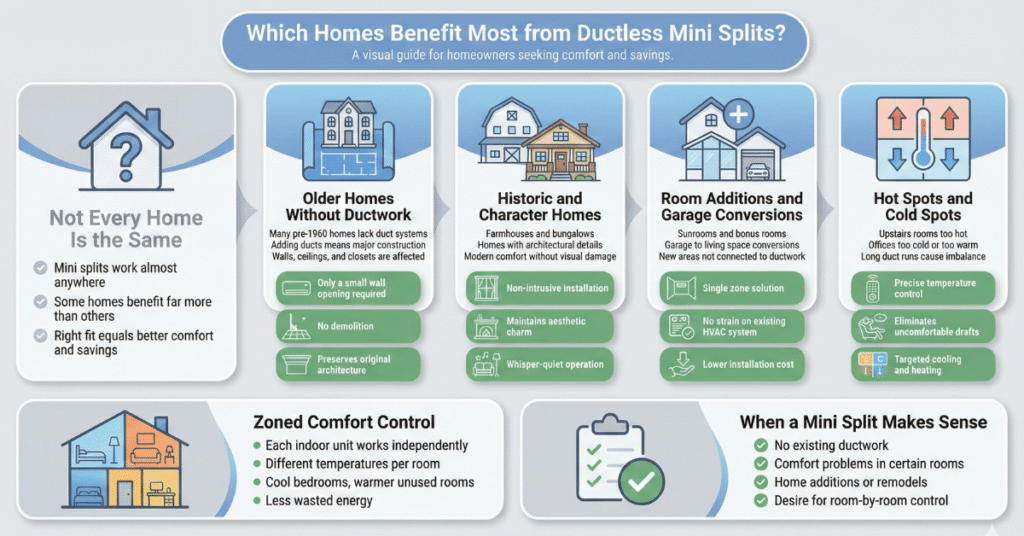
Many Oklahoma homes, especially those built before the 1960s, were never designed for central air conditioning. Adding ductwork to these properties often means tearing into walls, lowering ceilings, and sacrificing closet space, all at significant cost.
Mini splits bypass this problem entirely. Installation requires only a small three-inch hole through an exterior wall to connect the indoor and outdoor units. There’s no demolition, no major construction, and no damage to your home’s original character.
For owners of historic farmhouses, craftsman bungalows, or any older home without existing ducts, a ductless system offers modern comfort without compromising architectural integrity.
Room Additions and Garage Conversions
Converting a garage into a living space? Adding a sunroom or bonus room? Extending your existing ductwork to these areas can be expensive and may overtax your current HVAC system.
A single-zone mini split provides an independent heating and cooling solution for additions without affecting the rest of your home. The outdoor unit can often be positioned close to the new space, keeping refrigerant line runs short and installation costs reasonable.
Hot Spots and Cold Spots in Your Home
Does your upstairs bedroom turn into a sauna every summer while the living room stays comfortable? Do you have a home office that never seems to reach the right temperature? These comfort inconsistencies are common in homes with central air, especially those with long duct runs or poor insulation in certain areas.
Mini splits solve this problem through zoned control. Each indoor unit operates independently, allowing you to set different temperatures in different rooms. You can keep your bedroom cool for sleeping while letting unused guest rooms stay warmer, saving energy in the process.
If you’re dealing with comfort issues throughout your home, our team at Girdner Heat and Air can assess your situation and recommend whether a mini split, improved ductwork, or another solution makes the most sense. Learn more about our mini split HVAC services.
How Long Do Mini Split Systems Last?
Investing thousands of dollars in a comfort system naturally raises questions about longevity. The good news is that mini splits are built to last.
Expected Lifespan and Maintenance Requirements
According to Carrier, you can expect 10 to 15 years of efficient, reliable use from a quality mini split system purchased from a reputable manufacturer. With proper care, 20 years or longer is realistic and not entirely unheard of.
Several factors contribute to mini split durability. Carrier notes that systems with inverter-controlled variable-speed operation put less wear and tear on fans, compressors, and other components. Unlike traditional systems that slam on and off at full power, inverter-driven mini splits ramp up and down gradually, extending component life.
HVAC.com reports that the average lifespan of a ductless mini split is 15 to 20 years, which is comparable to or better than traditional HVAC systems. The simpler mechanical design and lack of ductwork, which is prone to wear and deterioration, contribute to this impressive longevity.
To maximize your system’s lifespan, plan on:
- Cleaning or replacing filters monthly during heavy-use seasons
- Keeping the outdoor unit clear of leaves, debris, and vegetation
- Scheduling annual professional maintenance to check refrigerant levels, clean coils, and inspect electrical connections
A maintenance plan from Girdner Heat and Air takes the guesswork out of keeping your system running at peak performance for years to come.
Is a Ductless Mini Split Worth the Investment?
For many Oklahoma homeowners, the answer is yes. Here’s how to think about the decision.
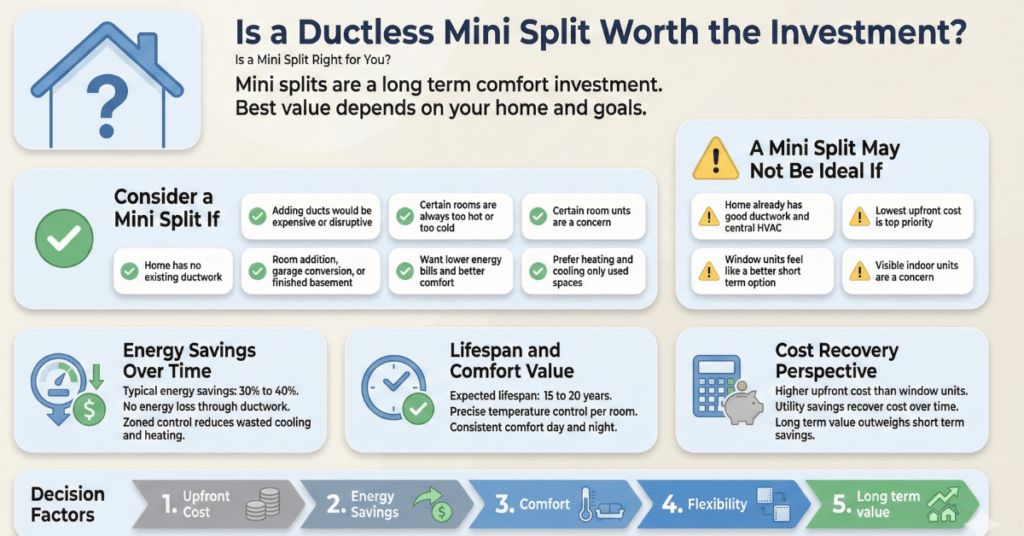
Consider a mini split if:
- Your home lacks existing ductwork and adding it would be costly or impractical
- You’re adding a room, converting a garage, or finishing a basement
- Certain rooms in your home are consistently too hot or too cold
- You want to reduce energy bills while improving comfort
- You prefer the flexibility of heating and cooling only the spaces you’re using
A mini split may not be the best choice if:
- Your home already has well-maintained ductwork and a functioning central system
- You’re looking for the lowest possible upfront cost (window units are cheaper initially, though less efficient)
- Aesthetics are a major concern and you don’t want visible indoor units on your walls
When you factor in energy savings of 30% to 40%, a lifespan of 15 to 20 years, and the comfort of precise temperature control, most homeowners find that mini splits deliver excellent value over time. The higher upfront investment compared to window units or portable ACs is typically recovered within a few years through lower utility bills.
Ready to Find Out If a Mini Split Is Right for Your Home?
Every home is different, and the best way to get an accurate cost estimate is to have a professional assess your specific situation. At Girdner Heat and Air, we help homeowners throughout Stilwell, Oklahoma and the surrounding communities in Oklahoma and Arkansas find the right heating and cooling solutions for their needs and budgets.
Whether you’re looking to add comfort to a single room or want to explore whole-home ductless options, we’re here to answer your questions and provide honest recommendations. We’ll evaluate your space, discuss your comfort goals, and help you understand exactly what a mini split installation would involve for your property.
Ready to stay comfortable year-round? Contact Girdner Heat and Air today for a free estimate and let’s find the perfect solution for your home.