Skip to content



Winter in Oklahoma means relying on your furnace to keep your family comfortable. When it’s time to replace your heating system, one of the biggest decisions you’ll face is choosing between a gas or electric furnace. Both options heat your home effectively, but they work differently and come with distinct advantages and costs.
The choice between a gas vs electric furnace affects your wallet, your home’s comfort level, and your long-term energy expenses. Understanding the differences between gas and electric furnaces helps you make a decision you’ll be happy with for years to come.
Understanding How Gas Furnaces Work
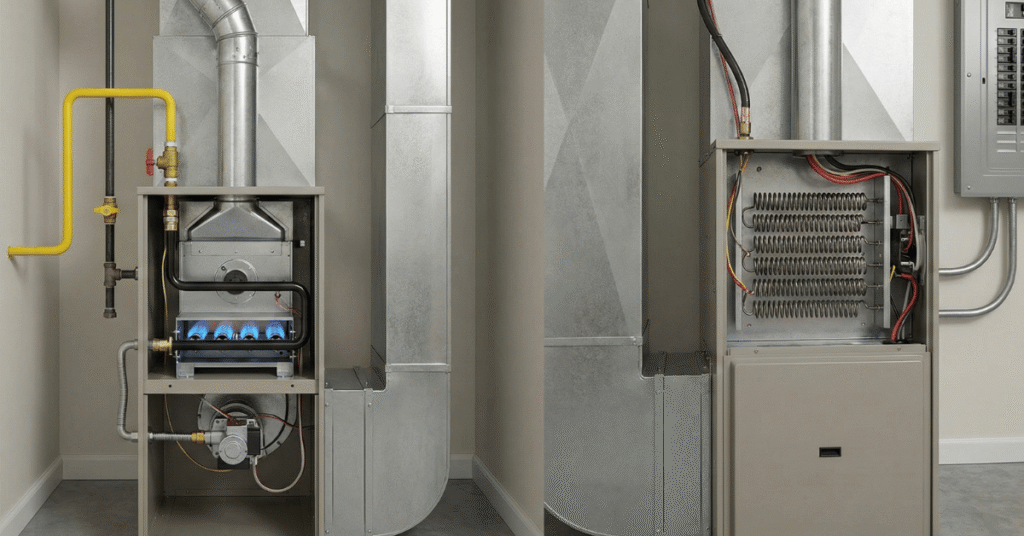
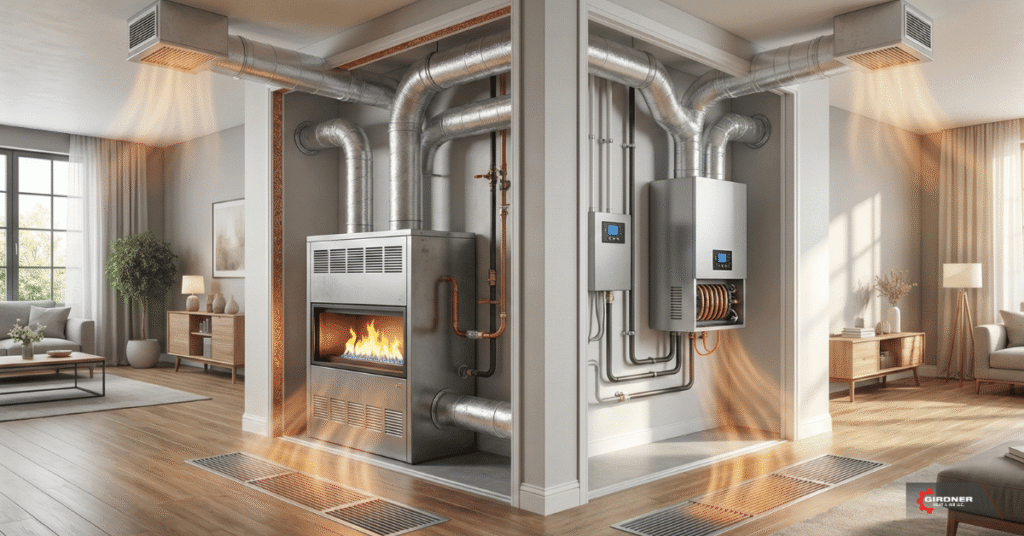
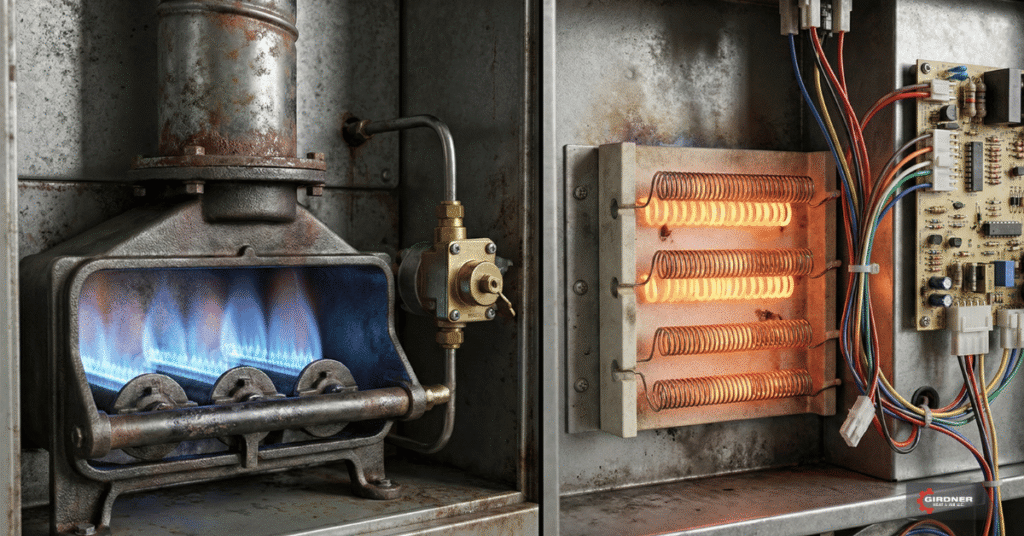
Gas furnaces burn natural gas or propane to create heat through combustion. The heat exchanger transfers warmth to air that circulates through your ductwork. Most modern natural gas furnaces achieve AFUE ratings between 80% and 98%, meaning they convert that much fuel into usable heat.
These systems deliver powerful, fast heating that can warm large homes quickly. Gas furnaces produce air temperatures between 130-140°F, making your home faster to heat during Oklahoma’s extreme cold snaps.
How Electric Furnaces Create Heat
Electric furnaces use heating elements to heat the air before distributing it through your home. They’re simpler machines with fewer parts requiring maintenance, repair, or cleaning than gas systems. Because there’s no combustion involved, electric furnaces are generally 95-100% efficient, converting all energy into heat.
However, electricity costs more per unit than natural gas in most areas. While electric units operate efficiently, higher operating costs mean your monthly bills will likely exceed gas heating expenses.
Installation and Operating Costs Comparison
Gas Furnace Installation:
- Equipment and installation: $2,500-$5,000
- Requires existing gas line or new gas connection
- Installing a gas furnace may add $1,000-$3,000 for new gas supply lines
- Gas furnace installation usually involves more complex setup
Electric Furnace Installation:
- Complete installation: $1,500-$3,500
- Electric furnace installation usually costs less upfront
- Requires only appropriate electrical connections
- No gas line needed
The upfront cost difference can be significant when deciding between a gas or electric system, especially if your home lacks natural gas connection access.
Monthly Operating Costs:
Natural gas is often cheaper than electricity for heating. A gas furnace typically costs $70-120 monthly during winter, while electric systems may run $120-$200 for equivalent heat output. Over the life of the furnace (15-20 years), this adds up to substantial savings, though results vary based on local energy prices and home insulation.
Gas vs Electric Furnace Comparison Table
| Feature | Gas Furnace | Electric Furnace |
| Installation Cost | $2,500-$5,000 | $1,500-$3,500 |
| Monthly Operating Cost | $70-$120 | $120-$200 |
| Lifespan | 15-20 years | 20-30 years |
| Efficiency Rating | 80-98% AFUE | 95-100% AFUE |
| Heat Output Temp | 130-140°F | 95-115°F |
| Maintenance Frequency | Annual required | Less frequent |
| Best Climate Use | Colder regions | Moderate climates |
| Energy Source Required | Natural gas/propane | Electricity only |
Pros and Cons of Gas and Electric Furnaces
Gas Furnace Advantages:
- Lower heating costs in most markets
- Gas is often cheaper than electricity per BTU
- Powerful heat output warms home faster
- Gas furnaces typically cost less to run than electric
- Natural gas prices remain relatively stable
Gas Furnace Drawbacks:
- Higher upfront installation expenses
- Gas furnaces require annual safety inspections
- Gas furnaces produce carbon monoxide risks
- Gas furnaces emit combustion byproducts
- Require a gas supply line
Electric Furnace Benefits:
- Electric furnaces are typically less expensive to install
- No carbon monoxide concerns
- Electric furnaces are often simpler to maintain
- Electric furnaces are generally safer regarding combustion
- Longer lifespan compared to gas furnaces
Electric Furnace Limitations:
- Higher operating costs in most areas
- Electric heat may struggle in extreme cold
- Electric systems use more energy during peak demand
- Local energy rates significantly impact costs
Energy Efficiency Considerations
When comparing gas vs electric furnace options, both types of furnace offer high energy efficiency. Electric furnaces are more efficient at converting energy into heat (95-100%), but natural gas furnaces often cost less to operate because natural gas prices remain lower than electricity rates.
The right furnace for your home depends on local energy costs, climate needs, and existing infrastructure. Gas and electric furnaces work differently, so understanding how each type of furnace performs in your specific situation matters most.
Maintenance, Repair, and Cleaning Requirements
Gas Furnace Maintenance:
- Annual professional inspections mandatory for safety
- Burner cleaning and adjustment needed periodically
- Heat exchanger inspection prevents carbon monoxide leaks
- Filter changes every 1-3 months
- Gas furnaces generally need more frequent professional service
Electric Furnace Maintenance:
- Annual service recommended but less critical
- Heating element inspection and testing
- Electrical connection checks
- Filter changes every 1-3 months
- Electric models require less intensive maintenance
Both furnaces require regular attention, but gas furnaces tend to need more vigilant care due to combustion safety. Girdner Heat and Air LLC offers maintenance plans for both gas and electric systems to keep your heating system running efficiently.
Making Your Decision: Gas or Electric Furnace
Choose a gas furnace if:
- Your home has existing natural gas connection
- You want lower monthly heating costs
- You need powerful heating for larger spaces
- You plan long-term occupancy to recover installation costs
Consider an electric furnace if:
- Adding a gas line is expensive or impossible
- Your upfront budget is limited
- You have a smaller, well-insulated home
- You prioritize simpler maintenance and longer equipment life
Professional Installation and Service
Whether a gas or electric furnace is right for your home, proper installation, repair, and ongoing cleaning make all the difference. Girdner Heat and Air LLC performs detailed load calculations to determine the correct size and type of furnace for your specific needs.
We ensure your new heating system integrates properly with existing ductwork and thermostats. Our installation meets all local codes and manufacturer specifications, protecting your warranty and safety.
Get Expert Guidance from Girdner Heat and Air LLC
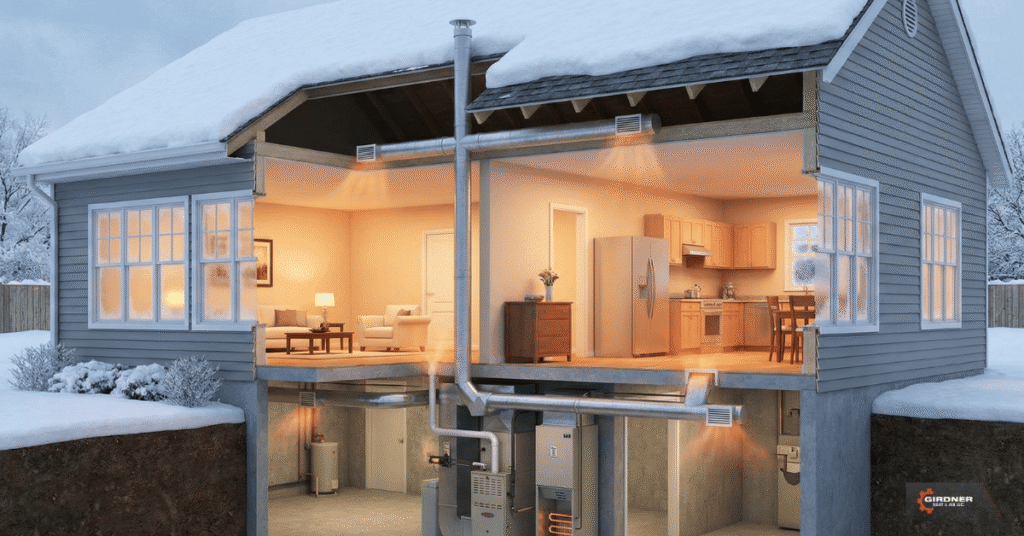
The gas furnace vs electric furnace question doesn’t have a universal answer. Your home’s infrastructure, utility rates, budget, and heating needs all factor into choosing the right furnace. Girdner Heat and Air LLC serves Stilwell, OK families with honest assessments and expert furnace installation, repair, and maintenance.
Ready to discuss your heating system replacement? Contact our team for a free consultation. We’ll help you compare gas vs electric furnace options based on facts, not sales pressure.