Skip to content



For most Oklahoma homeowners, a heat pump is the better choice because the state’s moderate winter temperatures (averaging 25°F to 45°F) fall squarely within the range where heat pumps operate at peak efficiency. Heat pumps can save you 20-40% on energy costs compared to gas furnaces while providing both heating and cooling in one system. However, if your home already has natural gas lines or you prefer a lower upfront cost, a furnace remains a reliable option.
Choosing between a heat pump vs furnace is one of the biggest decisions you’ll make for your home’s comfort. Oklahoma’s unique climate, with its hot summers and mild-to-moderate winters, makes this decision particularly interesting. Unlike homeowners in Minnesota or Maine who need maximum heating power, you have more flexibility to prioritize efficiency.
In this guide, we’ll break down how each system works, compare costs, and help you determine which option makes the most sense for your Stilwell-area home.
Key Takeaways
- Heat pumps can save Oklahoma homeowners 20-40% on energy costs compared to gas furnaces due to the state’s moderate winter climate
- Oklahoma’s average winter temperatures (25°F to 45°F) fall within the optimal efficiency range for modern heat pumps
- Dual fuel systems offer the best of both worlds for homeowners who want heat pump efficiency with furnace backup during occasional cold snaps
- Heat pumps provide both heating and cooling in one system, eliminating the need for separate AC units
What’s the Difference Between a Heat Pump and a Furnace?
Understanding how each system works helps explain why one might be better suited for Oklahoma’s climate than the other. The fundamental difference comes down to how they create warmth inside your home.
How Heat Pumps Transfer Heat
A heat pump doesn’t generate heat. Instead, it moves existing heat from one place to another using electricity and refrigerant. Think of it like a refrigerator running in reverse.
During winter, the heat pump extracts warmth from the outdoor air (yes, even cold air contains heat energy) and transfers it inside your home. During summer, it reverses the process, pulling heat from inside and releasing it outdoors. This dual functionality means one system handles both your heating and cooling needs.
According to the U.S. Department of Energy, heat pumps can reduce your electricity use for heating by up to 75% compared to electric resistance heating like baseboard heaters. Modern heat pumps can be up to 300% efficient, meaning they produce three times more heat energy than the electricity they consume.
How Furnaces Generate Heat
Furnaces create heat by burning fuel, typically natural gas, propane, or heating oil. The combustion process heats a metal heat exchanger, and a blower fan pushes air across this hot surface before distributing it through your ductwork.
Gas furnaces are measured by their Annual Fuel Utilization Efficiency (AFUE) rating. A furnace with 95% AFUE converts 95% of the fuel it burns into usable heat. The remaining 5% escapes through exhaust gases. While this sounds efficient, it’s still less than a heat pump’s ability to move 200-300% more heat energy than it consumes in electricity.
To understand more about how residential HVAC systems work, including the components that keep your home comfortable, check out our detailed guide.
Heat Pump vs Furnace: Quick Comparison
| Feature | Heat Pump | Gas Furnace |
| Energy Efficiency | 200-300% (COP 2-3) | 80-98% AFUE |
| Upfront Cost | $10,000-$25,000 | $3,500-$7,500 |
| Monthly Operating Cost | $40-$160 | $30-$60 (gas) |
| Lifespan | 15 years | 15-20 years |
| Cooling Capability | Yes (built-in) | No (requires separate AC) |
| Best Climate | Moderate winters (above 25°F) | Extreme cold (below 25°F) |
| Maintenance Frequency | Twice yearly | Once yearly |
| Environmental Impact | Lower emissions | Higher emissions |
Is Oklahoma’s Climate Ideal for Heat Pumps?
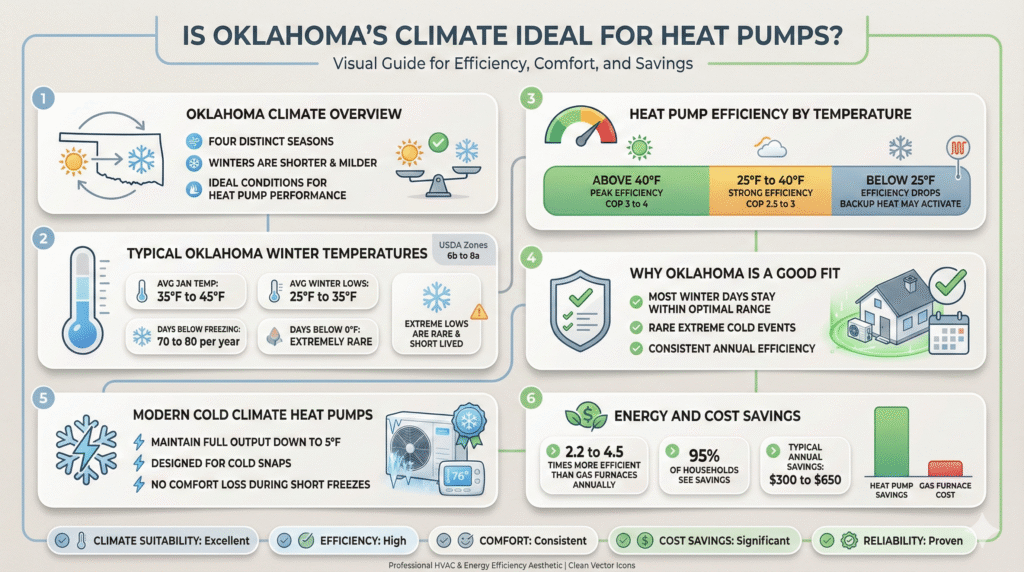
Oklahoma sits in a climate sweet spot that makes heat pumps particularly attractive. The state experiences four distinct seasons, but winters are notably milder than much of the country, which plays directly into a heat pump’s strengths.
Oklahoma’s Temperature Ranges and Heating Demands
According to the Oklahoma Climatological Survey, Oklahoma’s winters are “shorter and less severe than those of the more northern Plains states.” Periods of extreme cold are infrequent, and those lasting more than a few days are rare.
Here’s what Oklahoma’s winter temperatures typically look like:
- Average January temperature: 35°F to 45°F across most of the state
- Average winter lows: 25°F to 35°F
- Days below freezing: Approximately 70-80 per year in central Oklahoma
- Days below 0°F: Extremely rare (last significant occurrence was February 2021)
The state falls within USDA Plant Hardiness Zones 6b through 8a, indicating average minimum winter temperatures between 0°F and 15°F. However, these represent extreme lows, not typical daily temperatures.
For comparison, Oklahoma City’s January average temperature is 39.2°F, with overnight lows occasionally dipping into the 20s. This is well within the comfort zone for modern heat pumps.
How Winter Temperatures Affect Heat Pump Performance
Heat pumps work most efficiently when outdoor temperatures stay above 25-30°F. As temperatures drop below this threshold, their efficiency decreases because there’s less heat energy in the outdoor air to extract.
Here’s how temperature affects heat pump performance:
- Above 40°F: Heat pumps operate at peak efficiency (COP of 3-4)
- 25°F to 40°F: Efficiency remains strong (COP of 2.5-3)
- Below 25°F: Efficiency declines; supplemental heat may be needed
The good news for Oklahoma homeowners? According to research from the Rocky Mountain Institute, modern heat pumps are 2.2 to 4.5 times more efficient than gas furnaces on an annual basis, even accounting for reduced efficiency during cold snaps.
Cold-climate heat pumps have changed the game even further. EnergySage reports that newer cold-climate models maintain 100% efficiency at temperatures as low as 5°F. A 2024 study by the National Renewable Energy Laboratory found that 95% of households installing cold-climate heat pumps saw utility bill savings, with median annual savings of $300 to $650.
Which System Costs More to Install and Operate?
Cost is often the deciding factor for Oklahoma homeowners choosing between heating systems. Let’s break down both the upfront investment and ongoing expenses.
Upfront Installation Costs
According to Home Guide’s 2026 cost data, here’s what you can expect to pay:
Heat Pump Installation:
- Air-source heat pump: $10,000 to $25,000+
- Mini-split systems: Lower end of range
- Geothermal systems: Higher end of range
Furnace Installation:
- Gas furnace: $3,500 to $7,500+
- Electric furnace: Slightly less expensive
- Includes installation with existing ductwork
At first glance, furnaces appear significantly cheaper. However, this comparison isn’t quite apples-to-apples. A heat pump replaces both your furnace AND your air conditioner, while a furnace only handles heating. When you factor in the cost of a separate AC unit ($3,000 to $7,000), the gap narrows considerably.
Federal tax credits and local rebates can also reduce heat pump costs substantially. Many Oklahoma homeowners qualify for up to $2,000 in federal tax credits for high-efficiency heat pump installations.
If budget is a concern, ask about HVAC financing options that can make either system more affordable with manageable monthly payments.
Monthly Operating Costs in Oklahoma
Operating costs depend on fuel prices, system efficiency, and how much you run your heating system. Here’s how the numbers typically break down:
Heat Pump Operating Costs:
- Monthly heating cost: $40 to $160
- Provides cooling too (no separate AC bills)
- Electricity rates are relatively stable
Gas Furnace Operating Costs:
- Monthly heating cost: $30 to $60
- Requires separate AC for cooling ($50-$150/month in summer)
- Natural gas prices can fluctuate
Research from Zero Homes indicates that the average annual operating cost savings for switching from a gas furnace to a heat pump is approximately $650 per year for a 1,800 square foot home with modern insulation.
The Air-Conditioning, Heating, and Refrigeration Institute reports that heat pump sales outpaced gas furnaces by more than 26% from July 2024 to July 2025, suggesting more homeowners are recognizing these long-term savings.
When Should Oklahoma Homeowners Choose a Furnace?
While heat pumps make sense for most Oklahoma homes, furnaces remain the better choice in certain situations. Here’s when you might want to stick with a traditional furnace.
Homes with Existing Natural Gas Lines
If your home already has natural gas service and a functioning duct system, replacing an old furnace with a new high-efficiency model is often the most cost-effective short-term solution. You’ll avoid the higher upfront cost of a heat pump while still enjoying reliable heating.
Gas furnaces also make sense if:
- Natural gas prices in your area are exceptionally low
- You’re planning to move within 5-7 years (less time to recoup heat pump investment)
- Your electrical panel would require expensive upgrades to support a heat pump
For homeowners comparing fuel types, our guide on gas vs electric furnace comparison provides additional insights.
Situations Where Furnaces Excel
Gas furnaces have some genuine advantages:
Faster heating: Furnaces produce air at 110°F to 140°F, while heat pumps typically deliver air at 90°F to 100°F. This means furnaces warm your home faster during cold snaps.
Lower upfront cost: If budget is tight and you only need heating (perhaps you have window AC units or don’t use cooling), a furnace costs significantly less initially.
Longer lifespan: Furnaces typically last 15-20 years compared to 15 years for heat pumps. Since furnaces only run during heating season, they experience less wear.
Extreme cold performance: During rare Oklahoma cold snaps when temperatures plunge below 10°F, furnaces maintain full heating capacity while heat pumps may struggle.
Professional furnace installation ensures your system is properly sized and configured for maximum efficiency and comfort.
What Is a Dual Fuel System and Is It Right for Oklahoma?
For Oklahoma homeowners who want the best of both worlds, a dual fuel system (also called a hybrid system) combines a heat pump with a gas furnace backup. This setup is increasingly popular in our region.
How Dual Fuel Systems Work
A dual fuel system uses smart controls to automatically switch between your heat pump and furnace based on outdoor temperatures:
- Above 35-40°F: The heat pump handles all heating duties at peak efficiency
- Below 35-40°F: The system automatically switches to the gas furnace
- Summer months: The heat pump provides air conditioning
The switchover temperature can be customized based on your local electricity and gas rates to maximize savings. Most systems use smart thermostats that continuously monitor conditions and choose the most efficient heating source.
According to American Standard, switching from a standalone AC unit to a dual fuel system can save homeowners 30-50% on total heating and cooling costs.
Benefits for Oklahoma’s Unpredictable Weather
Oklahoma weather is notoriously unpredictable. You might experience 70°F temperatures in February, followed by a snowstorm the next week. Dual fuel systems handle this variability beautifully:
Energy optimization: You get heat pump efficiency during mild weather (which is most of Oklahoma’s winter) and furnace power during cold snaps.
Peace of mind: If one system fails, you have backup heating. This redundancy is valuable during severe weather when HVAC technicians may be overwhelmed with calls.
Extended equipment life: Because neither system works year-round, both the heat pump and furnace experience less wear and last longer. Dual fuel systems can last 20-25 years with proper maintenance.
Comfort consistency: Furnaces produce warmer air faster, which some homeowners prefer during the bitter cold. The dual fuel setup lets you enjoy heat pump efficiency without sacrificing comfort on the coldest days.
For optimal performance from any system, follow a seasonal HVAC maintenance checklist to keep your equipment running efficiently year-round.
How Do You Choose the Best Heating System for Your Home?
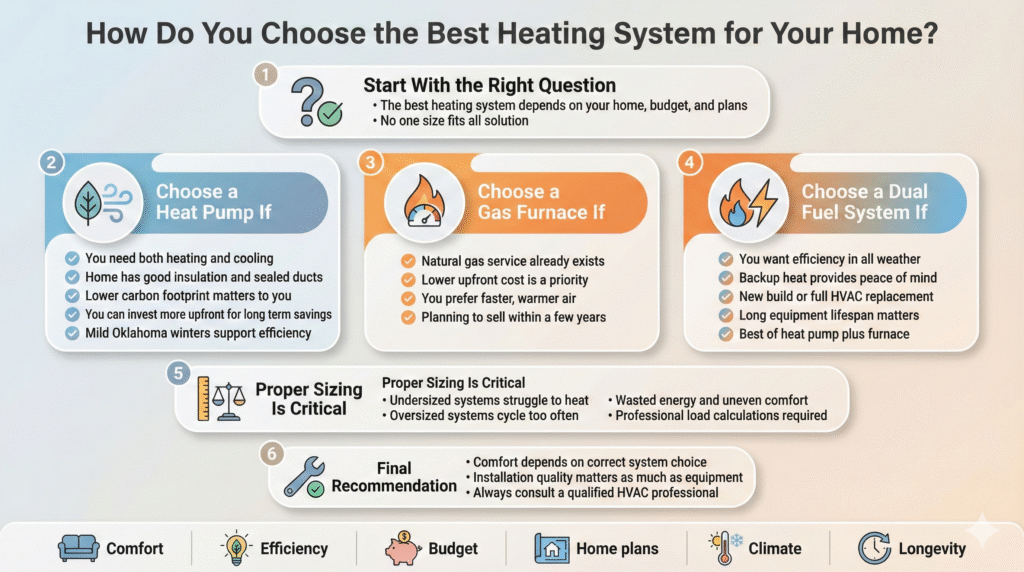
Selecting the right heating system involves weighing several factors specific to your situation. Here’s a framework to guide your decision:
Choose a heat pump if:
- You need to replace both heating and cooling equipment
- Your home has adequate insulation and sealed ductwork
- You want to reduce your carbon footprint
- You’re comfortable with higher upfront costs for long-term savings
- Oklahoma’s mild winters appeal to you for efficiency reasons
Choose a gas furnace if:
- You already have natural gas service and functional ductwork
- Budget constraints make the lower upfront cost important
- You prefer faster, warmer air during heating season
- You’re planning to sell your home within a few years
Choose a dual fuel system if:
- You want maximum efficiency across all weather conditions
- Peace of mind from backup heating is important to you
- You’re building new or doing a complete HVAC replacement
- You want equipment that will last 20+ years
Regardless of which system you choose, proper sizing is critical. An undersized system won’t keep your home comfortable, while an oversized system cycles on and off too frequently, wasting energy and causing uneven temperatures.
Ready to Find the Right Heating System for Your Oklahoma Home?
Oklahoma’s moderate climate gives you excellent options for home heating. Heat pumps offer impressive efficiency and year-round comfort for most homeowners, while furnaces remain a solid choice for those with existing gas infrastructure. Dual fuel systems provide the ultimate flexibility for our unpredictable weather.
The best choice depends on your specific home, budget, and comfort priorities. A professional assessment can help you understand which system will deliver the most value over its lifetime.
At Girdner Heat and Air, we help Stilwell-area homeowners navigate these decisions every day. We’ll evaluate your home’s heating needs, explain your options clearly, and recommend the system that makes the most sense for your situation.
Have questions about heat pumps, furnaces, or dual fuel systems? Give us a call today to schedule a consultation. We’re here to help you stay comfortable through every Oklahoma season.