Skip to content
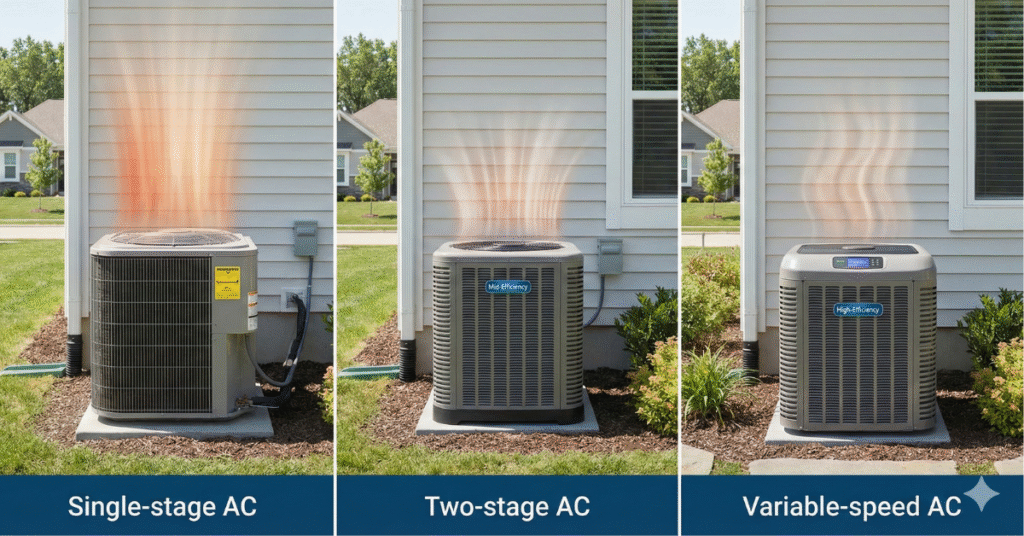
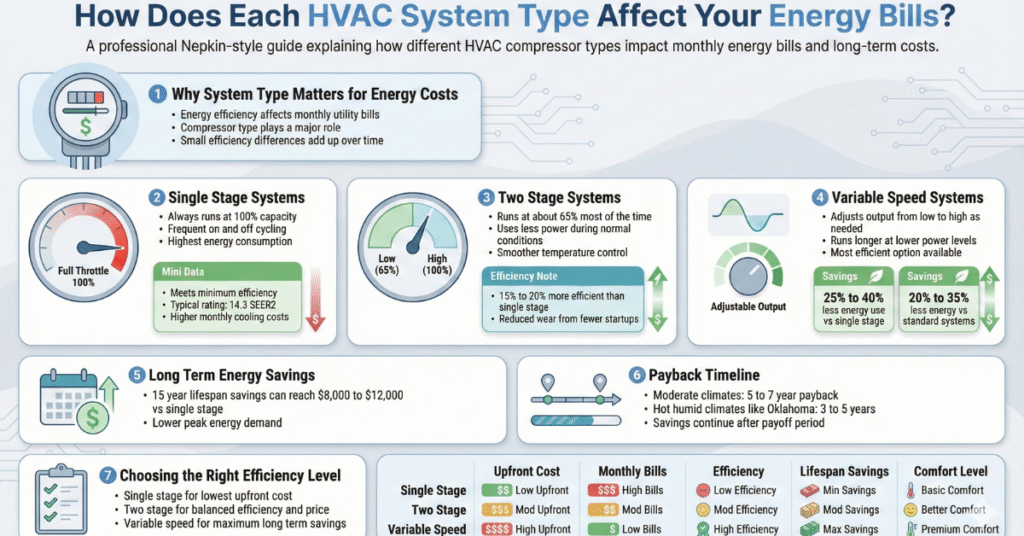
Single-stage air conditioners cost less upfront but run at full power every cycle, while two-stage systems offer moderate efficiency gains with dual-speed operation, and variable speed ACs deliver the best energy savings (25-40% reduction) plus superior humidity control for Oklahoma’s humid summers.
The right choice depends on your budget, comfort priorities, and how long you plan to stay in your home.
Key Takeaways
- Single-stage ACs operate at 100% capacity whenever they run, making them the most affordable option but least efficient choice for Oklahoma homeowners
- Two-stage systems run at approximately 65% capacity most of the time, reducing energy use by 15-20% compared to single-stage units
- Variable speed ACs adjust output from 25% to 100% capacity, potentially saving $8,000-$12,000 in energy costs over a 15-year lifespan compared to single-stage systems
- Oklahoma’s average relative humidity of 60-70% makes dehumidification capability a critical factor when choosing your next central air system
- Variable speed systems typically last 15-20 years, compared to 10-12 years for single-stage compressors
What’s the Difference Between Single Stage vs Two Stage vs Variable Speed AC?
Understanding how each compressor type operates helps you make an informed decision about your home’s cooling system. The compressor is the heart of your air conditioner, and its design directly affects your comfort, energy bills, and long-term costs.
How Single-Stage AC Systems Work
A single-stage air conditioner has one operating mode: full power. When your thermostat calls for cooling, the system turns on at 100% capacity and runs until your home reaches the set temperature. Then it shuts off completely until temperatures rise again.
According to HVAC.com, single-stage units are found in approximately 70-80% of American homes. They remain popular because of their lower purchase price and straightforward operation. These systems typically carry SEER2 ratings between 13.4 and 15, meeting minimum federal efficiency standards for the Southeast region.
The main drawback is the constant cycling on and off. This creates temperature swings throughout your home and uses more energy during each startup sequence. Single-stage systems also struggle with humidity control because they don’t run long enough to remove adequate moisture from the air.
How Two-Stage AC Systems Work
Two-stage air conditioners add flexibility with a low-speed setting that operates at approximately 65-70% of full capacity. According to Trane, these systems run on the low setting most of the time and only kick into high gear on extremely hot days or when you need rapid cooling.
This design reduces the frequent on-off cycling that wastes energy in single-stage systems. Two-stage units run for longer periods at lower power, which improves both efficiency and humidity removal. Most two-stage air conditioners achieve SEER2 ratings between 15 and 18.
The longer run times at reduced capacity also mean quieter operation. Your system isn’t constantly blasting at full power, creating a more comfortable indoor environment with fewer temperature fluctuations.
How Variable Speed AC Systems Work
Variable speed air conditioners represent the most advanced compressor technology available for residential cooling. These systems can operate at virtually any capacity between 25% and 100%, making tiny adjustments to precisely match your home’s cooling needs.
The U.S. Department of Energy confirms that a variable-speed motor running at half speed uses only 25% of the power to move the same amount of air as a single-speed motor at full capacity. This dramatic efficiency improvement is why variable speed systems achieve SEER2 ratings of 18 to 26 or higher.
Carrier, a leading HVAC manufacturer, explains that variable speed technology employs advanced sensors and algorithms to continuously monitor indoor temperature and humidity levels. The system automatically adjusts its speed and airflow to maintain consistent comfort without the energy waste of full-power operation.
How Does Each System Type Affect Your Energy Bills?
Energy efficiency directly impacts your monthly utility costs and long-term ownership expenses. Understanding the efficiency differences between compressor types helps you calculate potential savings.
Single-Stage Energy Consumption
Single-stage air conditioners consume the most energy for several reasons. First, they always run at maximum capacity whether your home needs that much cooling or not. Second, the frequent startup cycles require significant power draws each time the compressor kicks on.
These systems typically meet minimum efficiency requirements, which currently stand at 14.3 SEER2 for the Southeast region including Oklahoma. While adequate for basic cooling, single-stage units cost more to operate month after month compared to higher-efficiency options.
Two-Stage Efficiency Improvements
Two-stage systems improve efficiency by 15-20% over comparable single-stage units. Running at 65% capacity most of the time means less energy consumption while still maintaining comfortable temperatures.
The reduced cycling also extends equipment life and lowers peak energy demand. Your system isn’t constantly starting and stopping, which is when air conditioners use the most electricity. Two-stage units provide a solid middle ground between affordability and efficiency.
Variable Speed Energy Savings
Variable speed air conditioners deliver the most significant energy savings of any compressor type. According to Southeastern Mechanical Services, these systems can reduce energy consumption by 25-40% compared to single-stage systems.
Over a 15-year system lifespan, a variable speed system might save $8,000-$12,000 in energy costs compared to a single-stage unit. ENERGY STAR confirms that certified variable speed models use 20-35% less energy than standard models.
The payback period for variable speed technology typically ranges from 5-7 years in moderate climates and 3-5 years in hot, humid regions like Oklahoma. After that point, the monthly savings go directly into your pocket.
Which AC Type Provides the Best Comfort and Humidity Control?
Comfort involves more than just temperature. Humidity control, even cooling throughout your home, and noise levels all affect how comfortable you feel indoors.
Temperature Consistency Across Your Home
Single-stage systems create the most temperature variation because they blast cold air until the thermostat is satisfied, then shut off. This can leave some rooms too cold while others never quite reach the set temperature. The constant cycling creates noticeable temperature swings of 3-4 degrees.
Two-stage systems provide more even temperatures by running longer at lower capacity. The steady airflow distributes cooling more evenly throughout your home, reducing hot spots and cold zones.
Variable speed air conditioners maintain the most consistent temperatures, often within 0.5 degrees of your thermostat setting. The continuous low-speed operation provides a constant stream of conditioned air that eliminates the temperature rollercoaster common with single-stage units.
Why Dehumidification Matters in Oklahoma’s Humid Summers
The Oklahoma Climatological Survey reports that annual average relative humidity ranges from about 60% in the panhandle to over 70% in eastern Oklahoma. During summer months, this humidity combines with heat to create uncomfortable conditions that your air conditioner must address.
Air conditioners remove humidity as a byproduct of the cooling process. However, the system must run long enough to effectively dehumidify the air. Single-stage units often cool the air before adequately removing moisture, leaving your home feeling clammy even at comfortable temperatures.
According to the Department of Energy, variable capacity equipment automatically adjusts cooling capacity to meet current loads, providing superior dehumidification in humid climates. The longer run times at lower speeds allow these systems to remove significantly more moisture from your indoor air.
For Oklahoma homeowners, this means a variable speed or two-stage system will keep your home feeling more comfortable during our humid summers, even if you set the thermostat a degree or two higher.
What Are the Upfront Costs and Long-Term Value of Each System?
Understanding both initial investment and lifetime costs helps you make a financially sound decision. The cheapest system to buy isn’t always the cheapest system to own.
Quick Comparison: Single-Stage vs Two-Stage vs Variable Speed AC
| Feature | Single-Stage | Two-Stage | Variable Speed |
| Installed Cost | $3,000-$6,000 | $4,500-$8,000 | $5,500-$10,000 |
| SEER2 Rating | 13.4-15 | 15-18 | 18-26+ |
| Energy Savings vs Single-Stage | Baseline | 15-20% | 25-40% |
| Operating Capacity | 100% only | 65% or 100% | 25-100% |
| Temperature Consistency | 3-4°F swings | 1-2°F swings | Within 0.5°F |
| Humidity Control | Basic | Good | Excellent |
| Noise Level | Loudest | Moderate | Quietest |
| Expected Lifespan | 10-12 years | 12-15 years | 15-20 years |
| Payback Period | N/A | 5-7 years | 7-10 years |
| Lifetime Energy Savings | Baseline | $3,000-$5,000 | $8,000-$12,000 |
| Best For | Budget buyers, short-term owners | Balance of cost and comfort | Long-term owners, comfort priority |
Installation Cost Comparisons
Single-stage air conditioners cost approximately $3,000-$6,000 installed for a typical Oklahoma home, depending on system size and brand. These systems offer the lowest barrier to entry for homeowners on tight budgets.
Two-stage systems typically cost $4,500-$8,000 installed, representing a 30-50% premium over single-stage units. This price increase reflects the more sophisticated compressor technology and improved efficiency ratings.
Variable speed air conditioners range from $5,500-$10,000 or more installed. According to industry data, these systems cost 50-70% more than entry-level single-stage units. However, the premium buys significantly better efficiency, comfort, and longevity.
Getting your system properly sized is essential regardless of which type you choose. An oversized or undersized system will underperform and cost more to operate.
Payback Period and Lifetime Savings
Single-stage systems have no payback period to calculate since they represent the baseline cost. However, higher operating costs mean you’ll spend more on electricity over the system’s lifetime.
Two-stage systems generally reach payback in 5-7 years through energy savings and improved comfort. After that point, you continue saving money while enjoying better temperature control.
Variable speed systems usually reach payback in 7-10 years, though this timeframe shortens significantly in hot climates with long cooling seasons like Oklahoma. The substantial lifetime savings of $8,000-$12,000 compared to single-stage systems make variable speed technology a smart long-term investment for homeowners planning to stay in their homes.
How Long Does Each AC Type Last?
System longevity affects total cost of ownership. A system that lasts longer spreads its purchase price over more years of service.
Lifespan Expectations by System Type
According to Comfort Systems of Montana, compressor lifespan varies significantly by type:
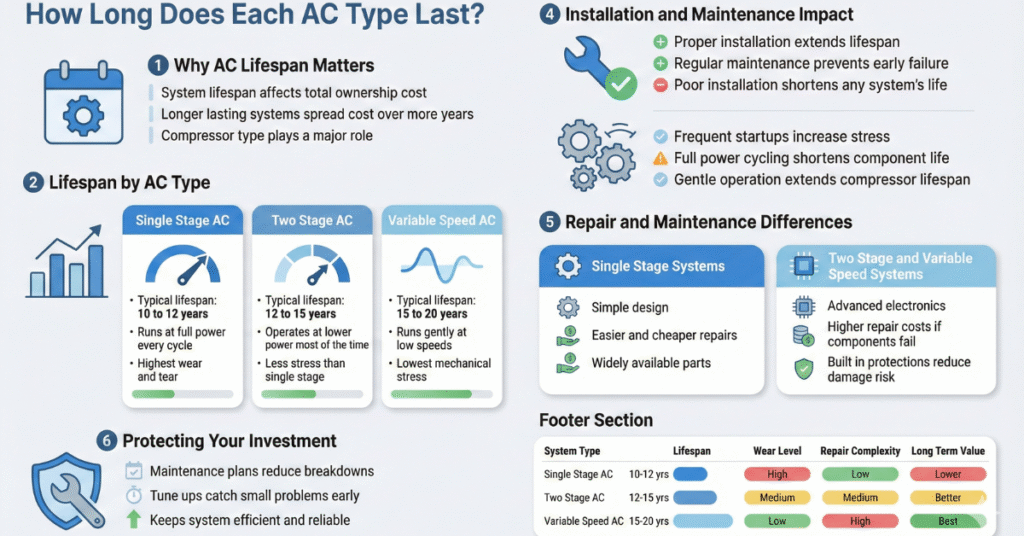
- Single-stage compressors typically last 10-12 years
- Two-stage compressors often last 12-15 years
- Variable-speed compressors can last 15-20 years with proper maintenance
The difference comes down to wear and tear. Single-stage systems experience the most stress from constant full-power cycling. Each startup puts strain on the compressor and electrical components. Variable speed systems run more gently at lower speeds most of the time, reducing mechanical stress and extending component life.
All three system types can exceed these averages with quality installation and regular maintenance. Conversely, poor installation or neglected maintenance will shorten any system’s lifespan.
Maintenance and Repair Considerations
Single-stage systems are the simplest to repair because they contain fewer complex components. Replacement parts are widely available and most HVAC technicians can service them easily.
Two-stage and variable speed systems require more specialized knowledge for repairs. The advanced electronics and control boards cost more to replace if something fails. However, these systems often include better safety features that protect components from damage.
Enrolling in an HVAC maintenance plan helps protect your investment regardless of system type. Regular tune-ups catch small problems before they become expensive repairs and keep your system running efficiently.
Which AC System Should You Choose for Your Oklahoma Home?
The best choice depends on your specific situation. Consider your budget, comfort priorities, and future plans when making this important decision.
When a Single-Stage AC Makes Sense
A single-stage air conditioner might be your best choice if:
- You’re working with a limited budget and need reliable cooling at the lowest upfront cost
- You plan to sell your home within the next 3-5 years
- You’re replacing a system in a rental property where tenant comfort isn’t the top priority
- Your home is small with simple ductwork that distributes air evenly
Single-stage systems provide dependable cooling at an affordable price. They won’t deliver the efficiency or comfort of more advanced systems, but they’ll keep your home cool during Oklahoma summers.
When a Two-Stage AC Is the Best Fit
Consider a two-stage system if:
- You want better efficiency and comfort without the premium price of variable speed technology
- You have rooms that consistently run hotter or colder than others
- You want improved humidity control during our humid Oklahoma summers
- You’re looking for a good balance between upfront cost and long-term value
Two-stage air conditioners represent the sweet spot for many homeowners. They deliver meaningful improvements in efficiency and comfort at a more accessible price point than variable speed systems.
When to Invest in Variable Speed Technology
Variable speed air conditioning makes the most sense if:
- You plan to stay in your home for 7+ years to realize the full energy savings
- You highly value consistent comfort and precise temperature control
- Family members have respiratory conditions that benefit from better humidity control and air filtration
- You want the lowest possible operating costs and environmental impact
- Your home has challenging cooling requirements due to size, layout, or sun exposure
If you’re deciding between repair and replacement on an aging system, upgrading to variable speed technology can transform your home comfort while reducing energy costs for years to come.
Ready to Find Your Perfect Cooling Solution?
Choosing between single-stage, two-stage, and variable speed air conditioning involves balancing your budget, comfort needs, and long-term goals. Each system type offers distinct advantages depending on your situation.
For Oklahoma homeowners dealing with our hot, humid summers, investing in at least a two-stage system often makes sense. The improved humidity control and efficiency gains provide real benefits you’ll notice every day during cooling season.
At Girdner Heat and Air, we help Stilwell area homeowners find the right cooling solution for their homes and budgets. Our experienced technicians can assess your home’s specific needs and recommend the system that delivers the best value for your situation.
Ready to upgrade your home comfort? Contact Girdner Heat and Air today to schedule a free consultation and get expert guidance on your AC installation options.