Skip to content

A professional HVAC tune up is a comprehensive maintenance service where a licensed technician inspects, cleans, and adjusts your heating and cooling equipment to ensure safe, efficient operation. During a typical visit lasting 1 to 1.5 hours, your technician examines both indoor and outdoor units, tests electrical connections, checks refrigerant levels, cleans critical components, and calibrates your thermostat. This preventive service helps lower energy bills, prevents unexpected breakdowns, and extends your system’s lifespan.
For homeowners in Oklahoma and Arkansas, where summer temperatures regularly climb into the 90s and winter brings freezing conditions, keeping your HVAC system in top shape isn’t just about comfort. It’s about reliability when you need it most.
Key Takeaways
- A professional tune-up includes inspection of indoor and outdoor units, cleaning, lubrication, electrical testing, and safety checks
- Regular maintenance can reduce energy bills by 5-15% and extend system lifespan by up to 50%
- Tune-ups typically take 1 to 1.5 hours and should be scheduled twice yearly (spring for cooling, fall for heating)
- Professional maintenance is often required to keep manufacturer warranties valid
- Oklahoma’s extreme temperatures make regular tune-ups especially important for system reliability
What Is an HVAC Tune-Up and Why Does It Matter?
An HVAC tune-up is a preventive maintenance service designed to keep your heating and cooling system running efficiently, safely, and reliably. Think of it like an oil change for your car. Regular service keeps everything running smoothly and helps you catch small problems before they turn into expensive repairs.
The U.S. Department of Energy recommends annual professional maintenance, noting that a well-trained technician can diagnose and fix issues affecting performance and efficiency.
The Purpose of Preventive Maintenance
Preventive maintenance identifies worn components before they fail completely. A technician might notice a fraying belt or corroded wire that could cause a breakdown if left unaddressed.
Regular tune-ups also keep your system operating at peak efficiency. According to Sears Home Services, heating and cooling accounts for 40-50% of total home energy use. When your system runs inefficiently, you’re paying more than necessary to stay comfortable.
The National Association of Home Builders found that regular maintenance can extend HVAC system lifespan by up to 50%. For a system that might otherwise last 15 years, that’s an additional 7-8 years of reliable service.
How Often Should You Schedule a Tune-Up?
HVAC professionals recommend scheduling maintenance twice per year. Have your air conditioning system serviced in spring before cooling season, and your heating system serviced in fall before winter arrives.
Most manufacturer warranties require proof of annual maintenance to remain valid. Skipping tune-ups could leave you responsible for repair costs that would otherwise be covered.
What Does a Technician Inspect During a Tune-Up?
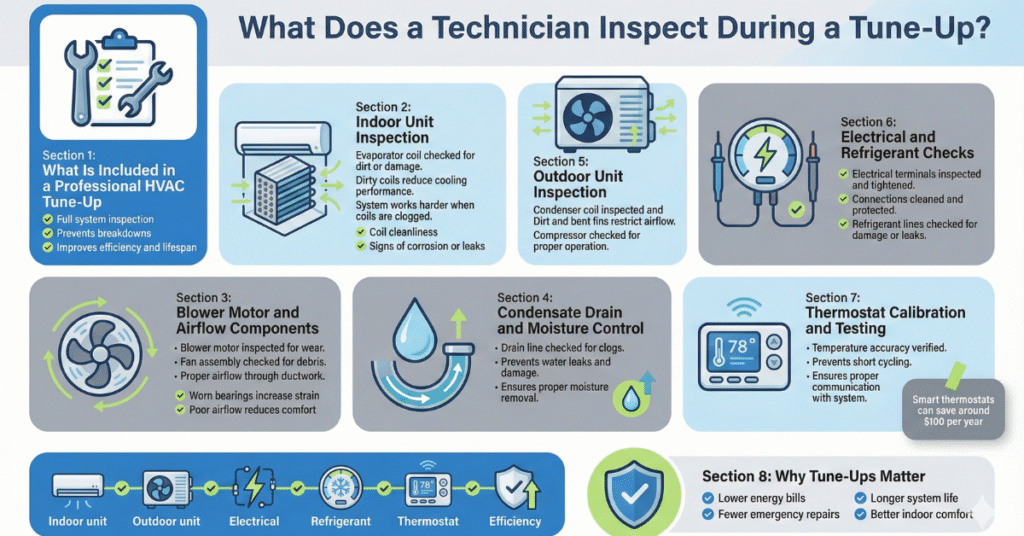
A professional HVAC tune-up involves thorough inspection of your entire system, including components that require specialized knowledge to evaluate properly.
Indoor Unit Inspection
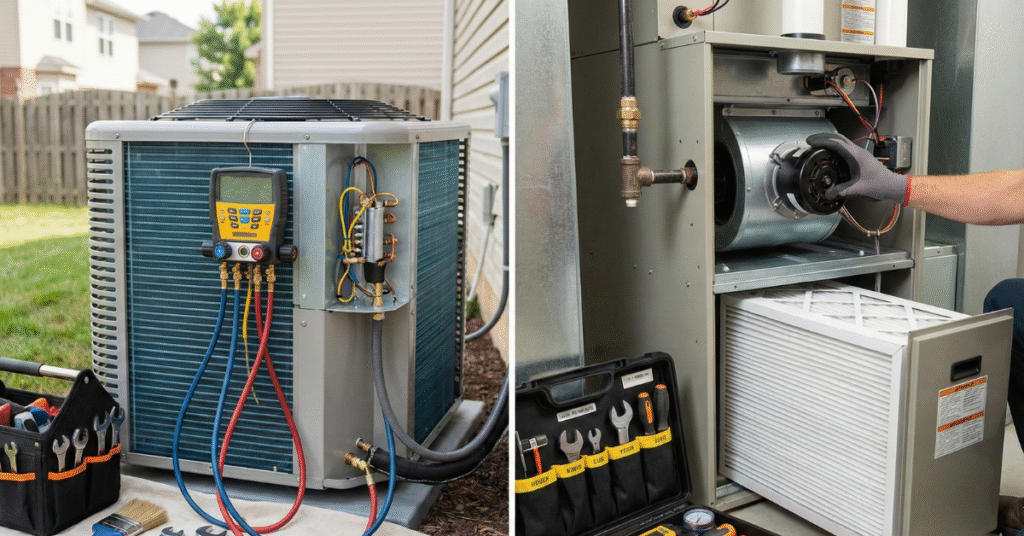
Your technician will inspect the evaporator coil, which absorbs heat from your home’s air during cooling. Dirty or damaged coils reduce cooling effectiveness and force the system to work harder.
The blower motor and fan assembly receive careful attention. These components move conditioned air through your ductwork. Worn bearings or accumulated debris can reduce airflow and strain the motor. The condensate drain line gets checked for clogs that could cause water damage.
Outdoor Unit Inspection
The outdoor condenser unit faces constant exposure to weather and debris. Your technician inspects the condenser coil for dirt and bent fins that restrict airflow. The compressor gets evaluated for proper operation.
According to the U.S. Department of Energy, a qualified technician should inspect electric terminals, clean and tighten connections, and apply a non-conductive coating if necessary. Refrigerant lines are examined for damage and signs of leaks.
Thermostat Calibration and Testing
A miscalibrated thermostat can cause short-cycling, where the system turns on and off frequently, wasting energy and causing unnecessary wear. Your technician verifies accurate temperature readings and proper communication with your HVAC equipment.
Energy Star notes that homes can save approximately $100 per year with a certified smart thermostat.
What Cleaning and Maintenance Tasks Are Performed?
Beyond inspection, a professional tune-up includes hands-on cleaning that directly improves system performance.
Air Filter Replacement or Cleaning
A dirty filter restricts airflow, forcing your system to work harder. Research from Sears Home Services indicates that replacing a dirty filter can reduce energy use by up to 15%.
Your technician will check your filter’s condition and either clean or replace it. Between professional visits, check your filter monthly and replace it every 1-3 months.
Coil Cleaning (Evaporator and Condenser)
Both indoor and outdoor coils require periodic cleaning. According to the NADCA energy study, cleaned HVAC systems demonstrate a 41-60% reduction in fan and blower energy consumption compared to dirty systems.
Your technician uses specialized cleaning solutions to remove accumulated dirt, pollen, and debris from coil surfaces.
Condensate Drain Line Clearing
Your air conditioning system removes humidity, and this moisture drains through a condensate line. Over time, algae and debris can clog this drain, potentially causing water damage or system shutdowns. Your technician clears the line and ensures water flows freely.
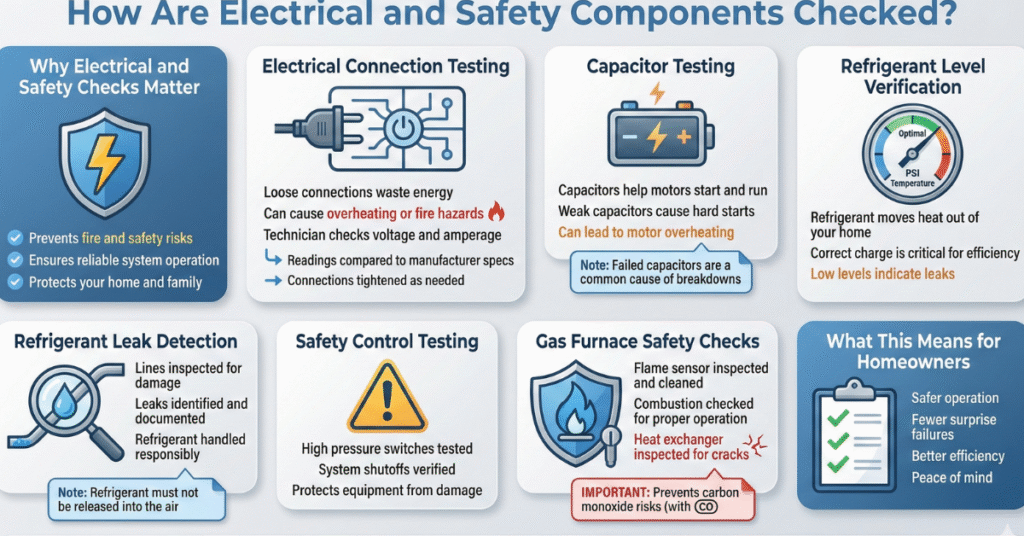
How Are Electrical and Safety Components Checked?
Electrical and safety checks help prevent dangerous conditions and ensure reliable operation.
Electrical Connection Testing and Tightening
Loose connections increase electrical resistance, wasting energy and potentially creating fire hazards. Your technician tests voltage and amperage at key points, comparing readings to manufacturer specifications.
Capacitors, which help start motors and keep them running efficiently, are also tested. A failing capacitor can prevent your system from starting or cause motors to overheat.
Refrigerant Level Verification and Leak Detection
Refrigerant carries heat out of your home during cooling. Your system requires a specific charge to operate properly. During a tune-up, your technician measures refrigerant levels. Low levels indicate a leak that needs repair.
The Department of Energy requires technicians to test for leaks and capture any evacuated refrigerant to prevent illegal atmospheric release.
Safety Control Testing
Your HVAC system includes safety controls like high-pressure switches and flame sensors. Your technician verifies each functions properly. For gas furnaces, this includes checking for proper combustion and inspecting the heat exchanger for cracks that could allow carbon monoxide into your home.
What Are the Benefits of Regular HVAC Tune-Ups?
Lower Energy Bills and Improved Efficiency
The U.S. Department of Energy Better Buildings Initiative estimates that following maintenance best practices can save 5-20% annually on energy bills.
Energy Star warns that improper installation or maintenance can reduce system efficiency by up to 30%, meaning you could be paying nearly a third more than necessary.
Extended System Lifespan
Research compiled by WorkTrek shows that preventive maintenance can add 5-10 years to HVAC system lifespan. A system with a base lifespan of 15 years might operate reliably for 20-22 years with regular maintenance.
Fewer Breakdowns and Emergency Repairs
According to WorkTrek’s analysis, emergency repairs cost 50-100% more than standard service calls. Running equipment to failure costs 3-10 times more than proper maintenance programs.
Regular tune-ups catch developing problems before they cause complete system failure, saving money and preventing disruption.
When Should You Schedule Your Tune-Up in Oklahoma?
Oklahoma’s climate presents unique challenges for HVAC systems. Schedule your air conditioning tune-up in March or April, before temperatures climb. This gives your technician time to identify issues and order parts before summer heat arrives.
For heating systems, schedule maintenance in September or October to prepare for winter. If you haven’t had maintenance in over a year, don’t wait. Schedule service as soon as possible.
Ready to Schedule Your HVAC Tune-Up?
Regular professional maintenance keeps your HVAC system running efficiently and helps prevent unexpected breakdowns. For homeowners in Stilwell, Oklahoma and surrounding communities, seasonal tune-ups are essential.
If you’re concerned about signs your HVAC system is failing or want to prevent common AC problems in Oklahoma summers, professional maintenance is your first line of defense. Our technicians can also perform system diagnostics for specific issues.
Consider an HVAC maintenance plan for regular service reminders and priority scheduling. Contact Girdner Heat and Air today to schedule your professional HVAC tune-up. We’re here to help keep your home comfortable year-round.